I have a very exciting update for everyone! For a few months now, I've had a little "Following" widget on the bottom of this blog's sidebar, because I thought it would give anyone who followed this blog notifications when I posted something new. But! It turns out that
It does NOT give you any sort of notification about new posts
It forces you to make a Blogger account, which is what this blog was made through.
So that widget is no more! Instead, I took the time to figure out how to make a subscription feed of my own. Please know that I do not have access to anyone who may or may not sign up for it, so you don't have to worry about that. If you want to know when I post new stuff, just put your email into the widget now at the top of the website's sidebar, or down below on this post!
"If honor and wisdom and happiness are not for me, let them be for others. Let heaven exist, though my place be in hell. Let me be outraged and annihilated, but for one instant, in one being, let Your enormous Library be justified."
This story is just as good as you've always heard it is. Ignore how short it is, because its scope spans well into the page space of a reader's own mind. I've previously read A Short Stay in Hell, which directly attributes its inspiration to this short story. While that novella is about 100 pages long, it, too, fails to encapsulate the magnitude of this world. The novella paints this world as a Hell earned through simply worshipping the wrong religion in life, whereas this original story paints the Library as a universe in and of itself, and so takes on a religious meaning of its own. Its infinite books are to be worshipped, to be pursued in a Manifest Destiny-esque race towards a mythic hexagon, to be lusted over by the ignorant. But they are never to be understood, no matter how much weight is put into understanding by the desperate.
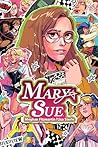
I unironically believe anyone in fandom that isn't already aware of the history behind Mary Sues should read this, especially if they're younger or far newer to fandom. Also I NEED A SEQUEL RIGHT NOW WHAT WAS THAT ENDING.
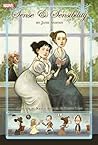
Reading this so soon after the original novel means I'm ripe for comparing it adaptation-wise. And I'm pleased to say it holds up very well, with all the benefits of a visual medium. There are some very unique panels (my favorite being Mrs. Jennings as she starts to recall the scandal at John Dashwood's home) that really emphasize certain aspects of the novel (in that example, the force of gossip running rampant through the story), and it has the benefit of unique character designs.
Often I find myself lost in movie adaptations due to characters looking incredibly similar, but the art style on display here makes every character unique and easy to recognize... even if it comes at the cost of Elinor's unfortunate forehead.
In truth, I never knew Jackson had stories outside of the three I have previously read until just a few weeks ago, when I saw a video recommending The Sundial. Perhaps I should have known, considering how well-known she is and how We Have Always Lived In The Castle is always specified as being her final novel, but the idea there were seldom-spoken-of books never really occured to me. I'm very happy to have finally dived into these older works of hers, though I can only source them as audio through Libby, which is far from my prefered for prioritized medium. But my boyfriend bought me Dressmaker earlier this week (and I intend to make a post showing off the dresses I have and will make in it!) which gives me a pleasant excuse to listen to a book for a change!
Anywhoo, enough of preamble. My Goodreads review is as follows:
Genuinely shocked this isn't widely recognized as a cornerstone of "weird girl lit" (outside of the introduction to the Penguin edition, that is).
And it's true! The introduction of the Penguin edition I listened to was from a professor discussing how Hangsaman was regreatably left out of a college class on weird novels due to not being read yet, and I found myself wishing I was still in my old monster literature class, just so I could discuss it's more gothic elements. Every single scrap of the novel was so interesting, from the main character, Natalie's, relationship with her father, to the looming threat of sexual predation faced by college students (which is, of course, as relevant as ever), to the complexities of female friendship.Perhaps the professor from the introduction would be well-done by teaching an entire class on Jackson, which Hangsaman as an underrated star?
I've decided to embark on a journey to read every Jane Austen novel in publication order, as well as a slew of related works, and to watch as many of the film adaptations as possible. This will inevitably be an ongoing process (much like my Wuthering Heights project, where I simply update that page with every film I see), but seeing as there's so many different books involved, I've chosen to opt for a blog tag over a page. As such, you can see all of the things in my "Jane-a-thon" under the Jane Austen tag.
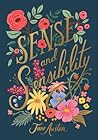
Edition: Puffin in Bloom (notable because I spent the better part of a month attempting to hunt it down, after happening upon the matching copies of Pride and Prejudice and Emma.)
One of the most delightful parts of this read was getting to see how humorous Jane Austen's writing is. The reason that these two chapters are my favorite (and why they're placed together, rather than me picking a favorite) is because they're linked by a purely comic misunderstanding between two characters. I won't go into further detail (spoilers!) but I was grinning through the entirety of the two chapters, and Austen was kind enough to nip any potential embarassment in the bud by having no real issues stem from it and keeping it brief. I find that the issue with miscommunication as conflict is that it's something so easily resolved that simply refuses to figure itself out for the sake of continuing the story. If you've ever watched Miraculous Ladybug, then you understand exactly what I mean.
I absolutely adored this book, more than my listed 4.5 ⭐ rating implies. I don't know if I've ever related so much to a family situation as I do with Elinor's, and seeing her ultimately rewarded is all of the comfort I could ever seek from a love story. Marianne was a hilarious character, though intentionally cumbersome, and brings to mind (at least for me) the image of Miette.
As you can imagine, there are a few cats drawn in the margins next to Marianne's lines.
I believe that gets the point across quite well, doesn't it? My favorite part of the movie was the nature elements; I think the caterpillar was a brilliant opening shot and I love the way it seems to symbolize the more sensible moments of all characters (Elinor and Edward while skipping stones, the Coronal at the end as he speaks with Marianne, etc.).
I specifically went out of my way to see the film at a Regal theater because I wanted the special Sense and Sensibility popcorn bucket. I don't think it was worth it, but I managed to snag the last one they had and I know I would have regretted it if I didn't at least try to get it.
Behold: my Samantha doll (who accompanied me to the theater) sitting on the tin!
Exactly what it says on the tin! These are the notes I personally took while I
was reading
Save the Cat: The Last Book on Screenwriting You'll Ever Need
by Blake Snyder earlier this month (both in picture form & transcript). And once again, I will mention that my
friend
Delphie recommmended
this book to me ^-^
Transcript
What is it?
If you can't summarize your story in 1 line, it isn't well thought-out |
"logline"/"one-line"
Irony is king, hook for drama & comedy
Good logline must envoke story in listener's mind | Suggests setting incl.
time span
Test marketing: talk about your story | best to try capturing the attention
of someone who doesn't want to listen
High-concept: movie you know everything about by the poster
Good exercises: pitching familiar plots- with a twist! (ex: funny Us, serious
Hot Frosty), unique senerios (place a crime drama hasn't happened, ____
school)
Avoiding Cliche
Know thy medium- study until you can dismantle a text from various time
periods
Learn the genre you want to work in & its rules
What is it most like?
Study these texts to learn what you must do with yours.
Story archetypes: master in house, golden fleece, out of bottle, guy w/
problem, rite of passage, whydunnit, fool triumphant, groupd (called
"institutionalized"), superhero
"True originality can't begin until you know what you're breaking away from"
(page 42)
Categorization as storytelling tool
Good exercises: Assign different movies into these story archetypes, try to
come up with your own archetypes
It's about a guy who...
Choose your hero! (+ antagonist)
Put adjectives in your logline + outline character goals
Even ensemble stories need a clear main character
Typically: plot first, then populate with characters
Who would be the ideal hero for a particular story?
Build character journeys from a premise
Best heros:
Offers the most possible conflict
Have the longest emotional journey
Best appeal to the masses (Always age characters down for Hollywood | Always
build in hyper-relatable relationships [boyfriend/girlfriend, parents,
siblings, best friends])
Know big actors on the scene, write what they will be looking for, but don't
expect that casting. Build in as much wiggle room as possible.
Character Archetypes
"young man on the rise"/"good girl tempted", "clever child", "sex
goddess"/"the hunk", etc.
Ensemble pieces where the setting takes the role of the central character
Ideal hero: identify with, learn from, are compelling, deserves to win,
truly resontates
Good exercises: re-work your logline with your characters in mind, study heros
within your genre & assign them archetypes, disignate main character in an
ensemble
Build It
Strong structure ensures a story will stay yours through any level
of management meddling (Literally, can be what gets you credited)
3-act structure: thesis, antithesis, synthesis
The Blake Snyder Beat Sheet (link will take you to the website, I have attempted to embed the PDF of
the sheet at the end of this section)
Opening Image, Theme Stated, Set-up, Catalyst, Debate, Break into Two, B
story, Fun and Games, Midpoint, Bad Guys Close In, All is Lost, Dark Night
of the Soul, Break into Three, Finale, Final Image
A movie script should be ~110 pages
Must show what is missing in a character's life
Good exercises: use the 15 beats to plot out your story or the story of a
preexisting movie
Cont.
Use a conspiracy board
Other Rules
Save the Cat (make audience like protag)
Pope in the Pool (make audience listen to exposition while they're distracted)
Double Mumbo Jumbo (only 1 fantastical thing per movie- no mixing aliens & vamps. Unless you're the Z-O-M-B-I-E-S franchise)
Lyping Pipe (avoid overwhelming amounts of set-up)
"Watch out for that glacier!" (Speed up antagonistic threat, or it will loose its teeth)
Covenant of the arc (everyone needs a character arc- unless they're villians)
Keep out the presses (breaks 4th wall)
Good exercises: figure out what rule is violated by a particular unlikable movie, find good exambples of Pope in the Pool
Fixing Things
Inactive heros -> proactive
Show not tell
Make bad guys evil-er (+ iconic)
Corkscrew the plot (accelerates over time)
Milk the audiences' emotions
Better dialouge
Actively contrast the end point to the start
Make side characters unique so the audience can tell them apart
Would a cave man be able to understand this plot?
Good exercises: find the weak spots in specific movies, examine how a fictional dynamic would change if you changed XYZ, test dialogue on unsuspecting innocents
Conclusion: Actually selling your script is 100% luck. Networking is your best friend. Good luck.
Today's book review is a bit neat, in that it's a short story! A very short story! A story that takes up about one page. I will admit that this was recommended to me by an Instagram reel, and that I literally just followed the creator's intructions in stopping everything I was doing (including watching the video) and reading it immediately. Now I'm encouraging you, dear reader, to do the same! What do you have to lose, it's literally one page.
"What's that got to do with Halloween?" "Do? Why, blast my bones, everything. When you and your friends die every day, thre's no time to think of Death, is there? Only time to run. But when you stop running at long last--"
A pretty good manual on writing for beginners looking to make it in Hollywood. The sections of this book dedicated to plot structuring, character development, and fixing weak spots in a story are best for anyone not looking towards sound stages. I'd advise anyone looking to use this for general writing advice to ignore the story archetype and demographic sections.
I did find this valuable enough that I took 5 pages of notes over the course of reading this, and the text of the book itself was very quick and easy to read. I do really recommend it!
I've been preparing for this day all year. Waiting in the wings for the moment the clock finally declares itself to be midnight on October 1st. Eagerly telling myself that I would not miss this the way I did last year. And finally, staying up allllll night until I could finally pull out a postcard and write:
Happy World Postcard Day!
While today is best referred to as the start of spooky season (and believe me, I am well aware and eager for that!) it's also World Postcard Day, most notably celebrated on the website Postcrossing. I'm a Postcrosser, joined March 2025, and now a proud participant in the holiday. Even if I have to wait to get the little badge on my profile!
Last month, I read a book on the history of USPS-issued stamps. Philatey is also an interest of mine, but my participation in Postcrossing came elsewhere. Namely, from the children's novel series Book Scavenger! The books are very dear to me; I recieved my copy of the first book at an event at my elementary school, annotated it, and later gave it and annotated copies of the other two books to my boyfriend for our first anniversary... which was in March 2025.
Book Scavenger lead to me looking into real-life things similar to the premise of the books, that being an online community where people hid books in locations hinted at through riddles or other puzzled, and then hunted down other books while competing against other people to solve the riddles to get the book first. Naturally that lead me to Bookcrossing, and then Postcrossing. The latter has become a sometimes hobby of mine thanks to its low entry cost, but I do also dabble in Bookcrossing (though it doesn't contain the riddle elements of Book Scavenger.
But that's enough of me. Here's a layout of the various things I'm sending today!
Four are for Postcrossing, while the rest are all personal corrispondance. I'm also sending some other letters with less attractive backs than the one Lion King-themed one I chose to include in this layout. The four cards I sent through Postcrossing are below.




 Often I find myself lost in movie adaptations due to characters looking incredibly similar, but the art style on display here makes every character unique and easy to recognize... even if it comes at the cost of Elinor's unfortunate forehead.